The challenge
Refurbishing and re-engineering ground support equipment is not a conventional stock-and-sales process. Every machine has its own condition, parts requirements, labour inputs, refurbishment steps and commercial history. A generic package may record purchases and invoices without giving engineers and management a coherent view of the complete lifecycle.
Why bespoke software was proposed
The customer needed to connect equipment acquisition, project creation, parts kits, engineering labour, consumables, refurbishment progress, sustainability records, costing and eventual sale. Management also required reporting across individual machines and the wider workshop, with access restrictions to protect commercially sensitive information.
InfoForte’s proposed solution
InfoForte specified a modular management information system centred on the life of each piece of equipment. Proposed modules covered acquisition and unique project identification, refurbishment stages, parts-kit allocation, dynamic parts additions, labour capture, sustainability data, configurable administration, reporting and Sage accounting integration.
Software designed for a workshop, not an office
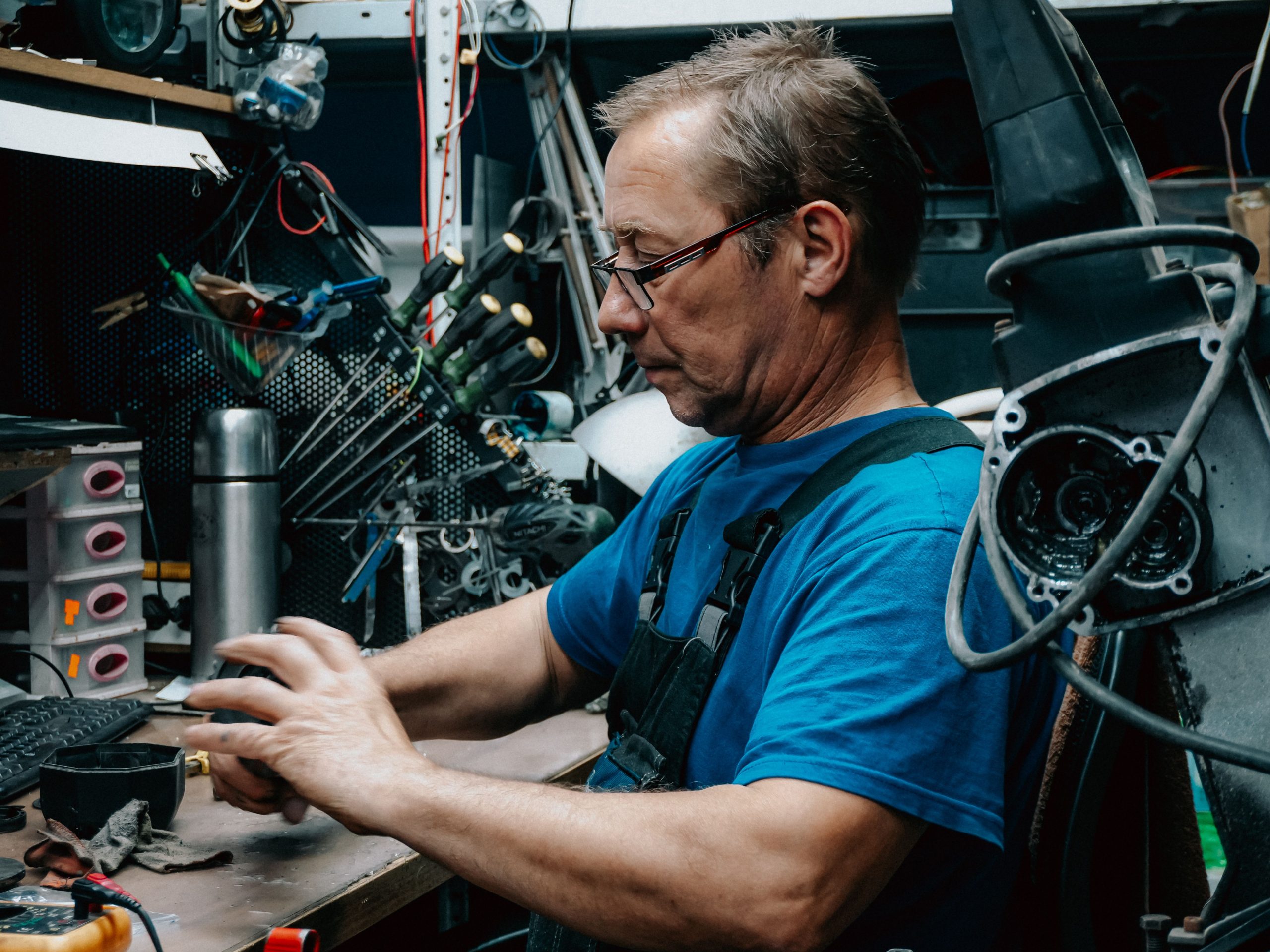
A notable element of the proposed design was the user interface: high-contrast screens, touch-friendly controls, short forms and clear status indicators suitable for mechanics using tablets or workstations in busy workshop conditions. This illustrates a core principle of bespoke development: software only adds value if the people doing the work can use it efficiently.
Structured engineering and review
The proposed delivery plan used an Agile-Lean approach with discovery, architecture, modular work packages, integration testing, user acceptance testing and training. Mapping the refurbishment lifecycle and validating cost and sustainability calculations early would reduce the risk of building technically correct software around incorrect business assumptions.
The intended business value
The proposed platform was designed to create a more complete picture of each refurbishment project, improve visibility of costs and work in progress, support consistent data capture and provide a foundation for future expansion into new equipment activities. These are planned benefits described in the proposal, not independently verified outcomes.
What this project demonstrates
The strongest bespoke projects often connect physical workflows, financial logic and specialist reporting in a way ordinary packages cannot.